Need storm & hail damage roof repair services in Phoenixville?
Tell us about your roof and request an estimate. A local provider in our network will follow up. There is no obligation to hire anyone.
No obligation
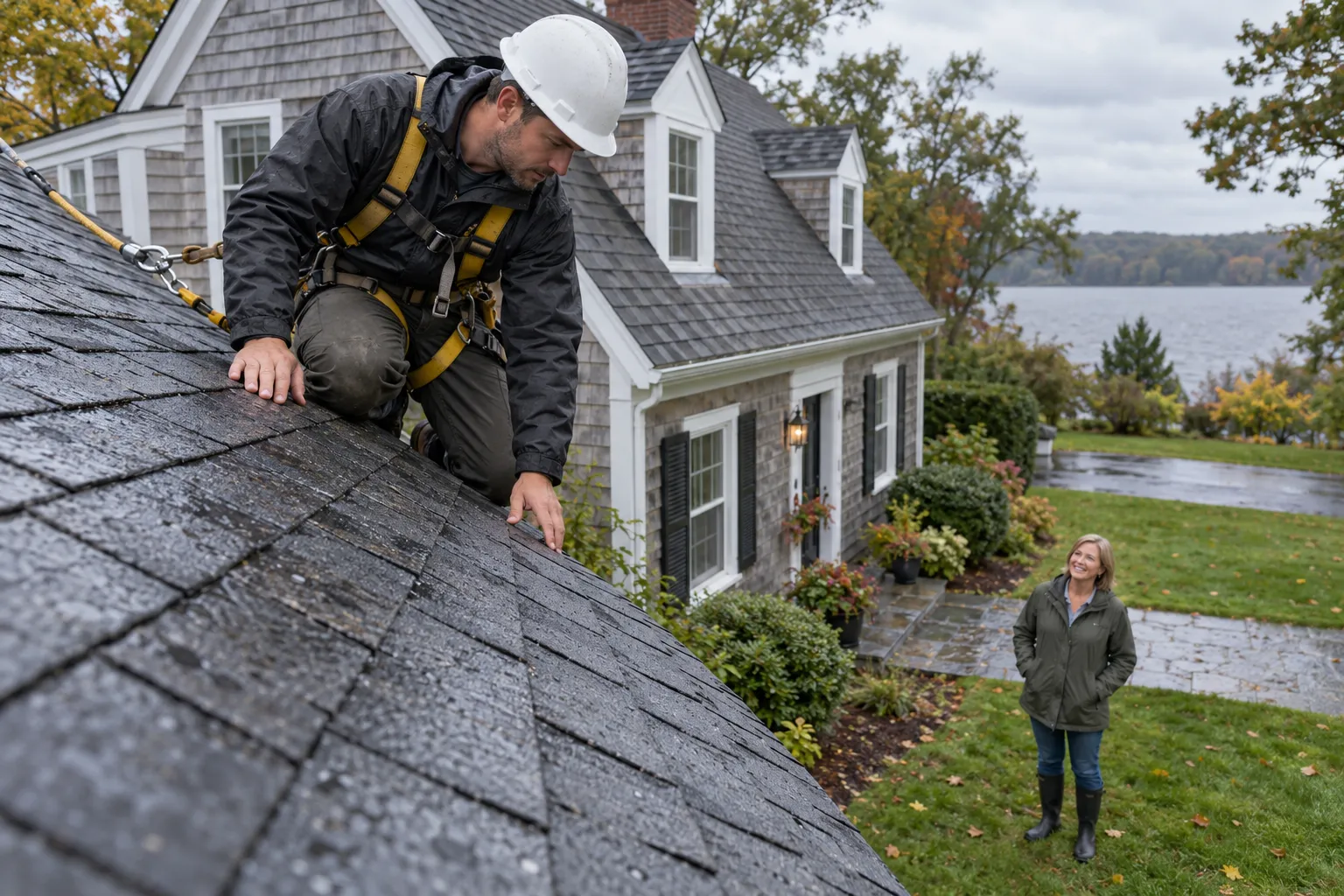
Request an estimate from a local provider
A storm can leave a roof damaged in ways you cannot see from the yard. Hail bruises shingles. Wind lifts and tears them. Fallen limbs crack the layers underneath. Small damage can let water in, and water leads to rot, mold, and stained ceilings.
Heroboots Roofing is a referral service. It does not do roofing work. It connects homeowners in the Phoenixville area with independent local roofing providers in its network. These providers inspect storm damage, explain what they find, and quote a fix in writing. This page shows you what to check, what to ask, and which warning signs to avoid. The providers in the network focus on new roof installs and full replacements, so this service suits you when the damage is serious enough to need a new roof.
Your safety comes before your roof. Stay off the roof and off wet ladders. Shingles, ice, and wet decking are slippery.
Stay out of rooms with sagging ceilings or active drips. If you see a downed power line, keep far away and call your utility.
Walk around the house once it is safe. Use your eyes, or a phone camera zoomed in. Look for:
Take dated photos of everything. You may need them later.
If water is coming in, move items and set out buckets. Many providers can place a temporary tarp, which is a heavy sheet that covers the damaged spot. Request a callback to check provider availability.
If you search for emergency roof repair, know this first. Our network focuses on new installs and full replacements. A tarp is a short-term cover. It is not a fix.
A damaged roof lets in water a little at a time. That water soaks insulation and wood. Mold can start in warm, damp spaces.
Cold climates add another problem. Water that gets under shingles can freeze, expand, and pry the layers apart. Then it thaws and does it again. Spring snowmelt makes it worse. Older homes with thin or worn roofing can feel this sooner.
An insurance claim often has a deadline too. Check your policy for the time limit.
Hail leaves round dents or bruises. A bruise is a soft spot where the granules are knocked off. The shingle may look fine but wear out early.
Wind creases, curls, or tears off shingles. It can also lift the edges so rain gets underneath.
A heavy branch can crack the roof deck, which is the wood layer under the shingles. Look at the attic ceiling for light or damp wood.
Driving rain pushes water sideways under flashing. Heavy ice and snow can bend gutters and loosen edges.
A good provider checks more than the shingles. Expect them to look at:
They should show you photos. They should explain what they see in plain words. Get it in writing.
It depends on how much of the roof is hurt and how old it is. A few torn shingles on a young roof may need only a patch. A roof with hail damage across several slopes usually does not.
A new roof makes sense when:
This is the case for hail damage roof replacement. Many roofs with widespread bruising are better replaced than patched. Ask the provider to show you why.
Some policies may cover sudden storm damage. Others have high deductibles or limits on roof age. Check your policy before you decide anything.
Providers can often help document damage for a claim. They can take photos and write up a scope of work. But only your insurer decides what is paid. Do not sign anything that says the provider speaks for you with the insurer unless you understand it.
After a big storm, strangers may knock on doors. Some are honest. Some are not. Know the red flags:
Covering a deductible can be a problem for you. Ask your insurer about it. Take your time and compare local roofing contractors.
Ask before you sign. Here are the key ones, and what a good answer sounds like.
A good answer is yes, with proof you can read. Ask for the papers. Check them yourself.
A good answer includes photos and a walk-through. A bad answer is "trust me."
Look for materials, removal of old roofing, cleanup, and the warranty terms. A good provider lists each one.
A good answer gives a price per sheet of wood, before work starts.
A provider looks over shingles, flashing, vents, gutters, and the attic, then explains what they find.
Clear photos of damage help you plan next steps and talk with your insurer.
Providers put scope, materials, and price on paper so you can compare before choosing.
If a patch will not hold, a provider can explain new roof options for your home.
Prices vary a lot by roof size, pitch, materials, and local rates. These are typical U.S. ranges only. Get a written quote from each provider before you decide.
| Item | Typical range | Notes |
|---|---|---|
| Roof inspection | $150 – $500 | Some providers fold this into an estimate |
| Temporary tarp | $300 – $1,500 | Short-term cover only, size and access matter |
| Small shingle patch | $300 – $1,000 | Only fits light, limited damage |
| Gutters and flashing | $500 – $2,500 | Dented pieces often need replacing |
| Asphalt shingle replacement | $8,000 – $20,000 | Common choice for hail damage on a full roof |
| Metal roof replacement | $15,000 – $40,000 | Costs more up front, lasts longer |
Stay off the roof. Photograph damage from the ground and inside, with dates.
Tell us about the storm and your roof. We link you with a local provider.
The provider checks the roof and attic and explains what they found.
Review the quote, ask your questions, and choose only when the price and scope are clear.
We help first-timers learn the right questions, so a storm does not push you into a rushed deal.
Providers in our network work near you and know the weather your roof faces each year.
We explain trade terms in short words, so you know what each line of a quote means.
We point out warning signs, like pressure tactics and big up-front payments, before you commit.
Tell us about your roof and request an estimate. A local provider in our network will follow up. There is no obligation to hire anyone.
Look for dents in metal parts, bare spots on shingles, and granules in the downspouts. Hail damage is often hard to see from the ground, so a provider should inspect the roof.
Some policies may cover sudden storm damage, but terms differ. Deductibles and roof age matter. Check your policy and ask your insurer. Providers can often help document damage for a claim.
If damage is limited and the roof is young, a patch may be enough. If hail hit most slopes or the roof is old, replacement is often the sounder choice.
Tell us about your roof and request an estimate. A local provider in our network will follow up. There is no obligation to hire anyone.
No obligation